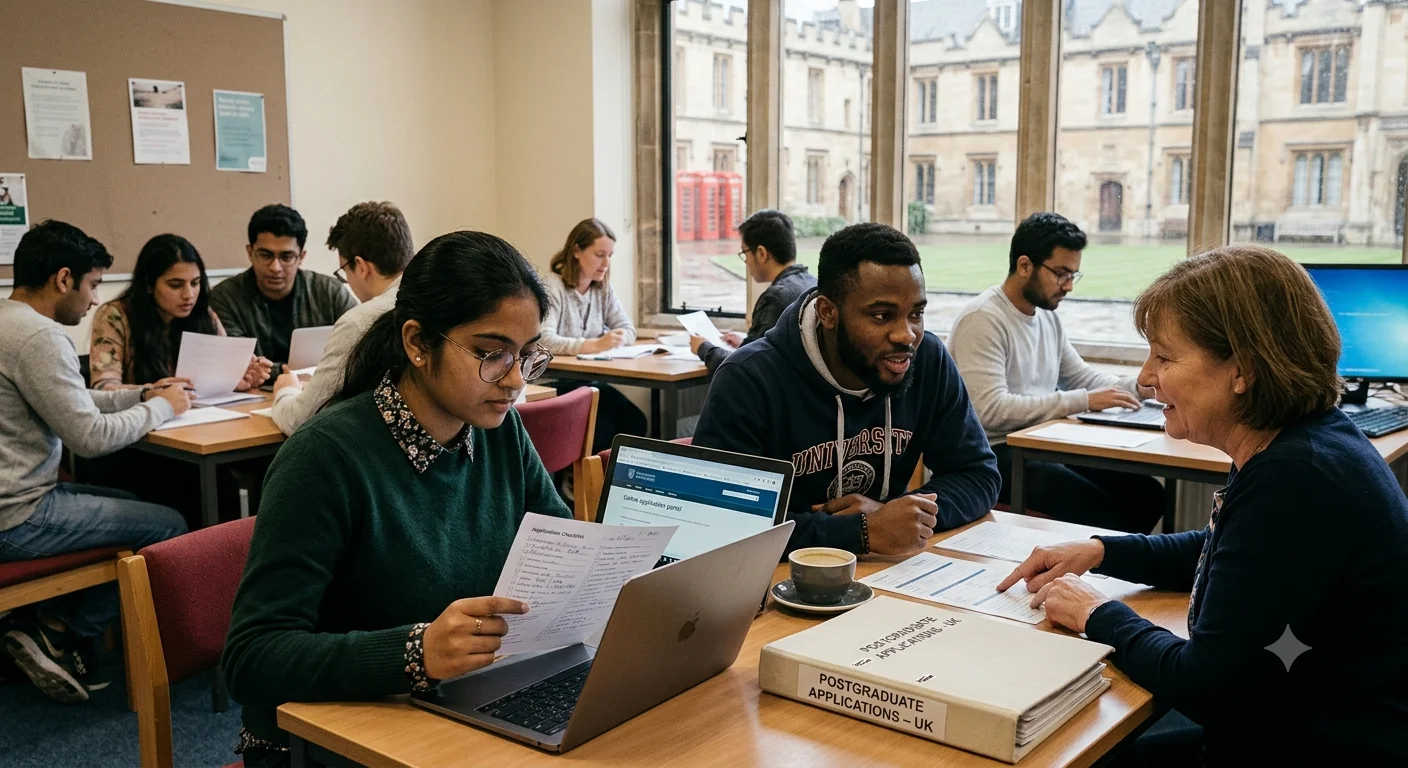

If you want to make the process of finding jobs faster and easier, completing postgraduate studies in the United Kingdom can help you in this way. The United Kingdom, with reputable universities, diverse fields of study, and excellent job opportunities after graduation, can be the best option for international students to apply for a postgraduate ‘s degree.
UK Postgraduate Admission Requirements
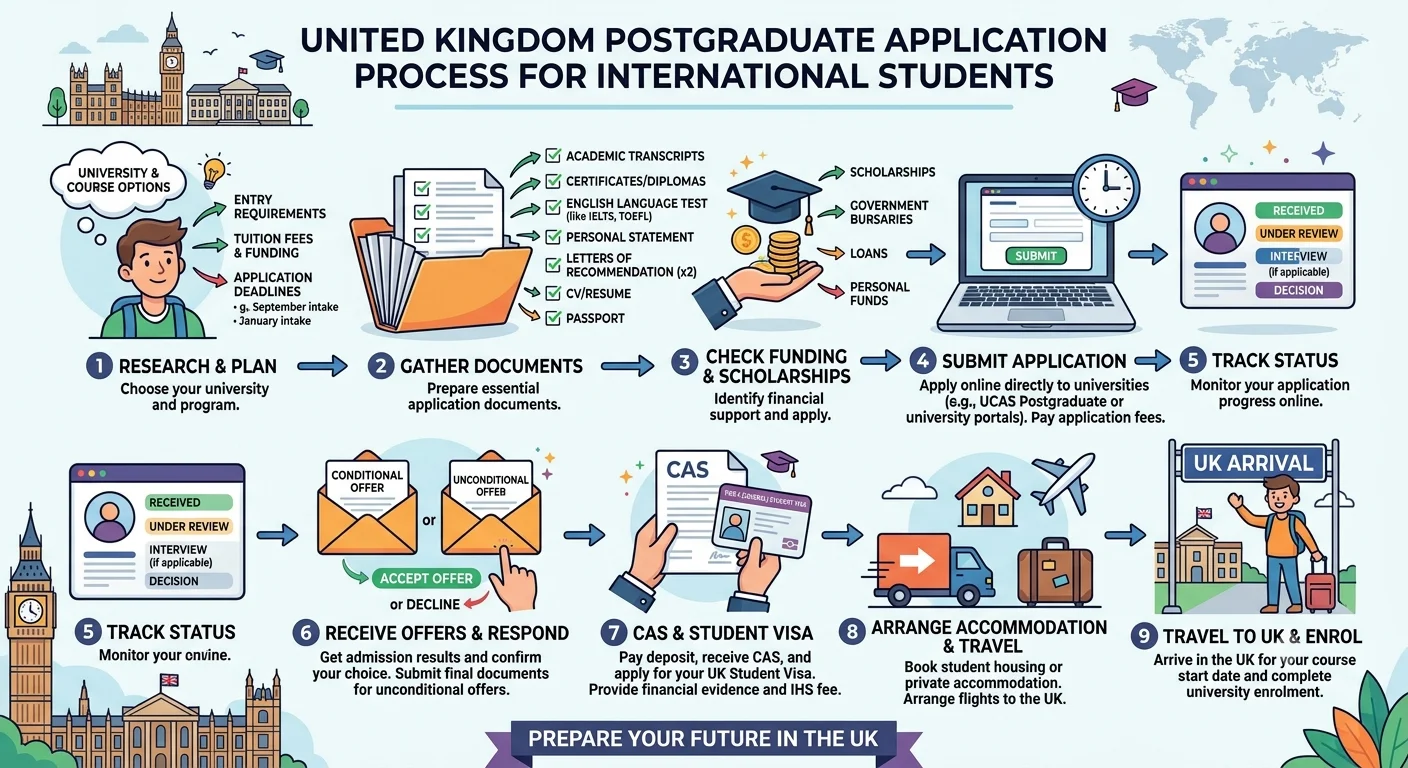
Different postgraduate courses in the UK have different entry requirements; however, some requirements for applying to study in the UK across almost all applications. The completeness of your documents plays an important role in the process of reviewing and accepting your application; therefore, be sure to carefully review and fully prepare all required documents before submitting your application.
Tip: always check the individual course websites for instructions on how to apply for Postgraduate at that university.
| Application requirement for international students
|
Details |
| An official bachelor’s degree | UK institutions may prioritize Honours degree-holding applicants. |
| Official transcript | shows strong academic performance |
| Language grade sheets | TOEFL, IELTS, or the Pearson Test of English) |
| Resume | Include an academic or professional résumé/CV. |
| A research proposal | for PhD students |
| Reference letters from professors or employers | One or more reference letters |
| Portfolio | Required for art and design-related courses |
| Standardized test scores | Such as GMAT for business school |
| personal statement | A written statement explaining your academic background and goals |
Applying to UK Universities as an International Student
If you are going to travel to study at a university on the other side of the world, it is natural to want to make sure you choose the university that is right for you. Choosing to study in the UK as an international student can be a big and difficult decision, but choosing the right university can be even harder. To select a right university, consider the following factors:
- Check the world university rankings, university impact ranking, teaching rankings and reputation rankings to make sure it’s the right university for you.
- There are hundreds of universities and colleges in the UK with different subject specialisms. Rather than choosing a famous university, see which one offers the best course for you.
- Another factor that can be important for many people when choosing a university is tuition fee, so be sure to consider this when choosing a university to study.
- Location of university is another key factor, finding somewhere you’ll be happy to live is an important consideration when you’re deciding where you want to study.
- Also consider the academic facilities and professors of the university, as an important part of your career and educational future depends on them.
- To increase your chances of getting accepted, I suggest choosing at least one other option besides your main choice.
UK Master’s Application Process
In general, a Master’s Application will involve completing and supplying the following documents:
- Application form
- Academic cover letter
- Personal statement
- Academic / professional references
- Certified copies of your degree and academic transcripts
- Research proposal (if you’re applying for a research Masters like an MPhil or MRes)
- English language test results
- Portfolio
- Standardized test scores based on your field of study
- You might also have to complete a graduate entry test
- usually need the Upper Second-Class Honours UK Bachelor’s degree or its international equivalent.
Each university has its own requirements and reviews them in its own way, so be sure to check the admission requirements and documents for your country on the website of the university you are applying to. And be sure to keep in mind that following all the details and deadlines is very important for your admission.
International Student Visa for UK Postgraduate Studies
Once accepted for studies at a particular university, students need to apply for a Student Visa (previously referred to as the Tier 4 Student Visa). This visa application process involves two steps, which include obtaining a Confirmation of Acceptance for Studies (CAS) from a university followed by visa application. In order to get a CAS, a student has to first be admitted to an appropriate program and receive an unconditional offer. Next, the student will have to provide academic qualifications along with proof of paying tuition fee deposit to a particular university to obtain the confirmation letter. Upon verification, the student will be provided with a CAS number, which will serve as a unique identifier during the visa application process. After the CAS is received, students need to apply for a visa online using the unique number. Apart from the CAS letter, students should provide valid passport information and evidence of sufficient funds for tuition fee payments. There are certain aspects that one should consider while applying for a visa, namely, one needs a CAS to apply for a visa, obtain CAS prior to visa submission and that the CAS is valid only for six months.
Tips for a Successful UK Postgraduate Application
- The Universities want writing that’s clear and professional. So, we should try to avoid using language that’s not specific or that is too emotional. We should always try to express our ideas in a way that’s easy to understand and accurate.
- Our Personal Statement should be short and to the point. We should try to show that we are really interested in the program. Be honest and don’t show your abilities better than what they are.
- We need to make sure we have money to pay for the University’s tuition fees and our living expenses. It is really important to get our funding sorted out before we go far with our application because we will not be able to attend the Universities without enough financial support.
- We should always check our application for spelling mistakes and grammatical errors. Even though the Universities know that English might not be our language, using tools to check our spelling and grammar can make our application a lot better.
- We should check the deadline for applying to each program at the Universities. Try to apply as soon as we can. The process of getting into the Universities can take a lot longer than applying for a job.
- We should ask our referees for help well in advance so they know what we are planning and have time to write a strong letter of recommendation to support our application to the Universities.
- We should try to stay positive and motivated throughout the application process because it can be a difficult process to get into the Universities and our chosen master’s program.
- use your time efficiency because the application process can be complicated and require a lot of documents and other materials. get everything ready ahead of time to avoid feeling stressed or having to search for papers at the last minute.

ScholarLink AI
Your Ultimate Admission Co-Pilot
- 🎓 Professors Database: World’s largest supervisor directory
- 📡 Live Positions: Real-time faculty openings & vacancies
- 👥 Students Database: Connect with successful applicants
- 🎯 Smart Matching: AI-driven professor recommendation
- 💰 Funding Analysis: Real-time lab & research funding data
- 📝 Apply Management: Track applications & cold emails