
Most international students applying for a Canadian Study Permit do not need an interview. IRCC evaluates most applications based on the information and documents submitted with the application. However, an immigration officer may ask you to attend an interview or provide additional information during the review process.
An officer may request an interview to clarify or verify information in your application, including your academic background, study plans, financial circumstances, or other aspects of your case. The purpose is to give you an opportunity to explain relevant information directly before a decision is made.
If you are asked to attend a Canada student visa interview, you should be prepared to explain your study plans, academic background, choice of program and institution, financial situation, and plans after graduation. Your answers should be clear, honest, and consistent with the information and documents submitted with your Study Permit application.
In this guide, you will learn what to expect during a Canadian student visa interview, common questions you may be asked, how to prepare, which documents to have available, and what may happen after the interview.
Important: Student Visa vs. Study Permit
The terms “student visa” and “Study Permit” are often used interchangeably, but they refer to different documents. A Study Permit allows you to study in Canada, while a visa or Temporary Resident Visa (TRV) may be required to enter Canada. In this article, we use the term “Canadian student visa interview” because it is commonly used by applicants searching for information about interviews related to the Study Permit application process.
Canadian Visa Interview Process for International Students
Understanding the Canadian visa interview process for international students can help you prepare for the possibility of an interview without relying on memorized answers.
A Canadian student visa interview is not a standard step for every Study Permit applicant. During the application review, an IRCC officer may ask you to attend an interview or provide additional information if needed.
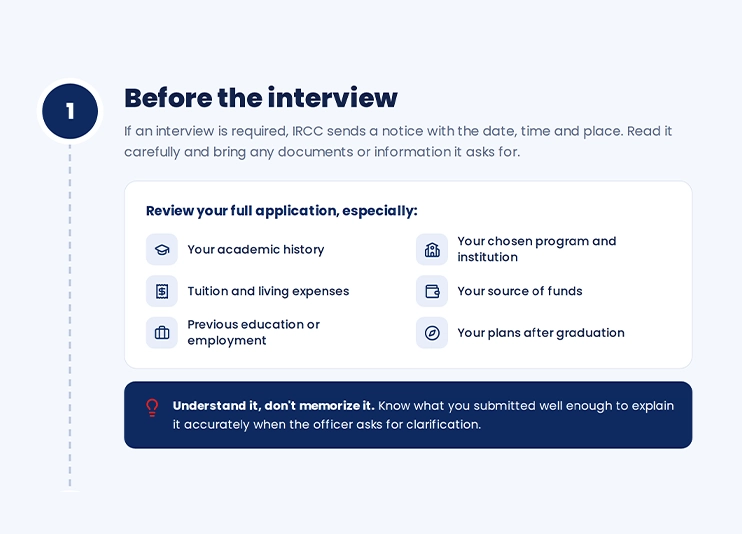
Before the Interview
If an interview is required, IRCC will provide instructions specifying the date, time, and place of the interview. Review the notice carefully and follow any instructions about documents or additional information you need to provide.
Before the interview, review your complete Study Permit application and supporting documents. Pay particular attention to:
- Your academic history
- Your chosen program and institution
- Tuition and living expenses
- Your source of funds
- Previous education or employment
- Your plans after graduation
The goal is not to memorize your application word for word. Instead, make sure you understand the information you submitted and can explain it accurately if the officer asks for clarification.
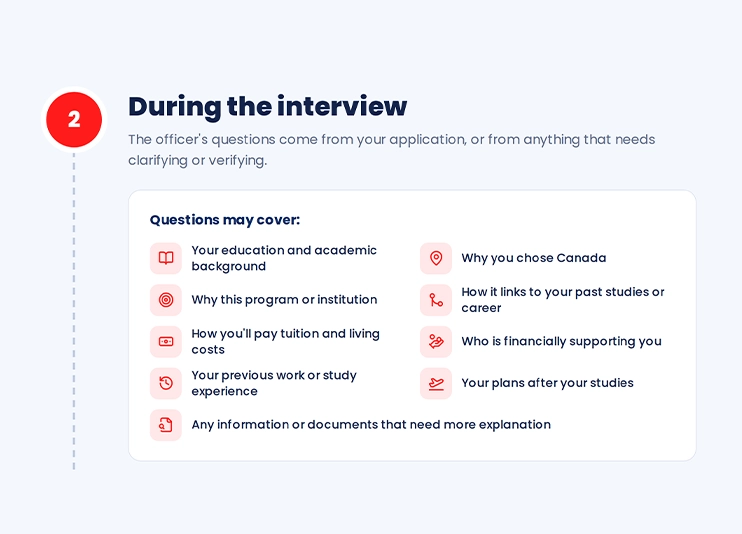
During the Interview
An IRCC officer may ask questions based on the information in your application or areas that require further clarification or verification.
Questions may cover:
- Your previous education and academic background
- Why you chose Canada for your studies
- Why you selected a particular program or institution
- How the program relates to your previous education or career
- How you plan to pay for tuition and living expenses
- Who is financially supporting your studies
- Your previous work or study experience
- Your plans after completing your studies
- Any information or documents that require further explanation
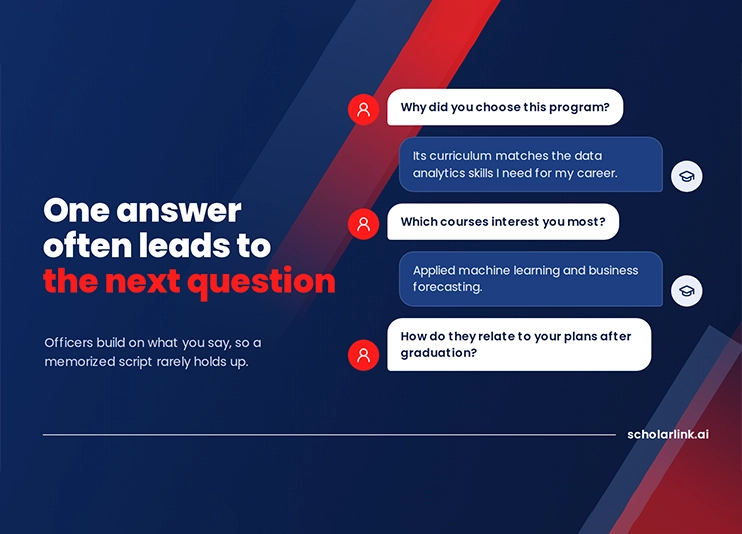
The officer may also ask follow-up questions based on your answers. For example, a question about your chosen program may lead to further questions about your academic background, career plans, or reasons for studying in Canada.
For this reason, preparing only by memorizing sample answers is not enough. You should be able to explain your study plans, academic background, and financial circumstances clearly and consistently with the information in your application.
After the Interview
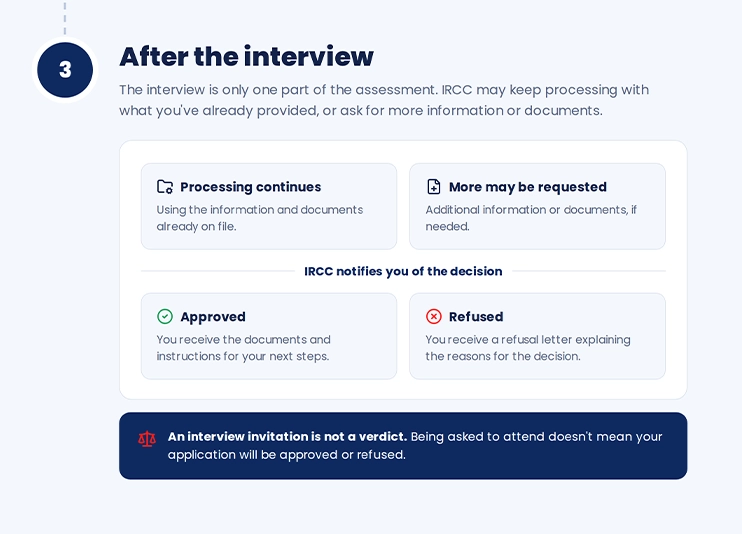
The interview is only one part of the overall assessment of your Study Permit application. After the interview, IRCC may continue processing your application using the information and documents already provided, or request additional information or documents if needed.
Once the review is complete, IRCC will notify you of the decision. If your application is approved, you will receive the documents and instructions needed for the next steps. If it is refused, you will receive a refusal letter explaining the reasons for the decision.
Being invited to an interview does not by itself mean that your application will be approved or refused.
Canada Student Visa Interview Questions
The Canada student visa interview questions may cover several areas of your application and study plans. There is no fixed list of questions that applies to every applicant. However, an IRCC officer may ask about your academic choices, reasons for studying in Canada, financial circumstances, and plans after graduation.
Questions About Your Study Plans
- Why do you want to study in Canada? Explain your specific reasons for choosing Canada, such as relevant academic opportunities, program availability, or other factors important to your study plans.
- Why did you choose this specific program? Explain how the curriculum relates to your interests, previous education, professional experience, or the skills you want to develop.
- Why did you choose this university or college? Highlight specific factors that influenced your decision, such as the program structure, specialized courses, research opportunities, facilities, location, or other features relevant to your field.
- What are your exact study goals? Clearly describe the knowledge, skills, and qualifications you expect to gain and how they fit into your broader academic or professional plans.
- What do you know about your program? Be familiar with the program’s curriculum, duration, key courses, and other details relevant to your studies.
- Why is this the right time for you to pursue this program? Explain how the program fits your current academic or professional situation and why it is a logical next step.
Questions About Your Academic Background
- What did you study previously? Summarize your academic journey and mention relevant work experience where appropriate.
- Why are you changing your field of study? If applicable, explain why you are changing fields and how the new field connects to your previous education, professional experience, or future career plans.
- How does this program relate to your previous education? Explain how your prospective degree builds upon, complements, or expands your existing knowledge and skills.
- Why did you have a gap in your education? If there is an education gap in your academic history, explain clearly what you were doing during that period.
- Why are you pursuing another degree in a similar field? If applicable, explain what additional knowledge, specialization, or professional skills the new program offers compared with your previous qualification.
Questions About Your Choice of Canada
- Why Canada instead of your home country? Explain the specific academic or professional features of your chosen Canadian program that are relevant to your goals, rather than making broad comparisons about education in different countries.
- Why not study in another country like the US or UK? Explain why Canada fits your particular academic plans, considering factors such as program structure, specialization, location, overall study costs, or other relevant considerations.
- What do you know about your prospective institution? Demonstrate that you have researched the institution by discussing relevant details such as the campus, program modules, facilities, or academic strengths.
- Why did you choose this institution instead of another Canadian institution? Be prepared to explain the specific features of your chosen institution or program that influenced your decision.
Questions About Finances
- Who will fund your studies? Clearly identify your financial sponsor or funding sources, such as your parents, yourself, a scholarship provider, or another source.
- What is your tuition fee and estimated living cost? Know the approximate cost of your tuition and living expenses so that you understand the financial requirements of your study plan.
- How will your sponsor cover these expenses? Explain your sponsor’s occupation or source of income, financial capacity, and how the available funds will cover your education and living expenses.
- What does your financial sponsor do? Be prepared to explain your sponsor’s profession, business, income source, or other relevant financial circumstances.
- Do you plan to work while studying in Canada? If asked, explain your financial plan clearly. Do not present employment in Canada as the primary way you intend to finance your studies unless your application and financial documents support that explanation. IRCC requires applicants to demonstrate sufficient funds to support their studies and living expenses.
Questions About Your Future Plans
- What will you do after graduation? Explain your intended career or further-study plans after completing the program and how they relate to your overall academic and professional goals.
- How will this degree help your career in your home country? Where applicable, explain how the knowledge and qualifications gained from the program can support your career plans, target roles, or opportunities in your home country.
- What kind of job do you plan to pursue after graduation? Identify the types of roles or industries that align with your education, previous experience, and newly acquired qualifications.
- How does this program fit into your long-term career plan? Connect your previous background, chosen program, and future career goals to demonstrate a clear and logical study plan.
- Do you have relatives or close contacts in Canada? Answer accurately and explain your relationship if asked. Do not omit relevant information simply because you think it may affect your application.
Questions That May Require Follow-Up
Some interview questions may lead to additional questions depending on your answers.
For example, if you say that you chose a program because of its curriculum, the officer may ask which courses interest you or how those courses relate to your career plans.
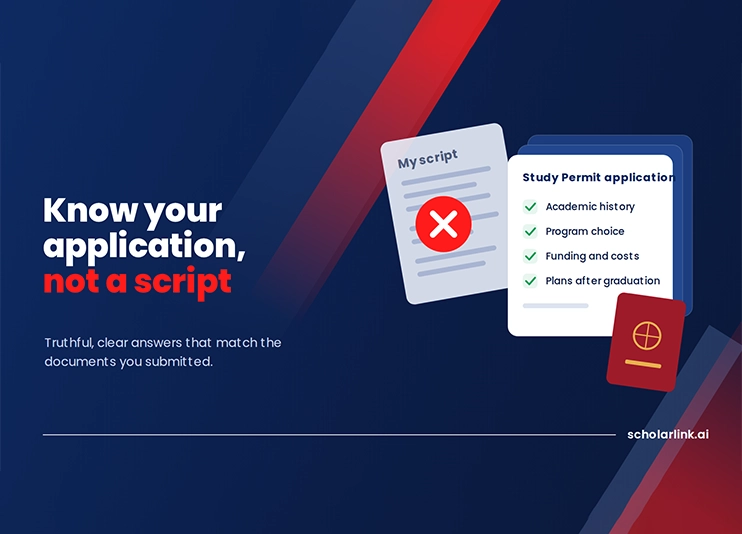
For this reason, avoid memorizing a fixed script. Instead, review your application carefully and make sure you can explain the main elements of your study plan in your own words. Your answers should be truthful, clear, and consistent with the information and documents submitted with your application.
Preparing for Canadian Study Permit Interview
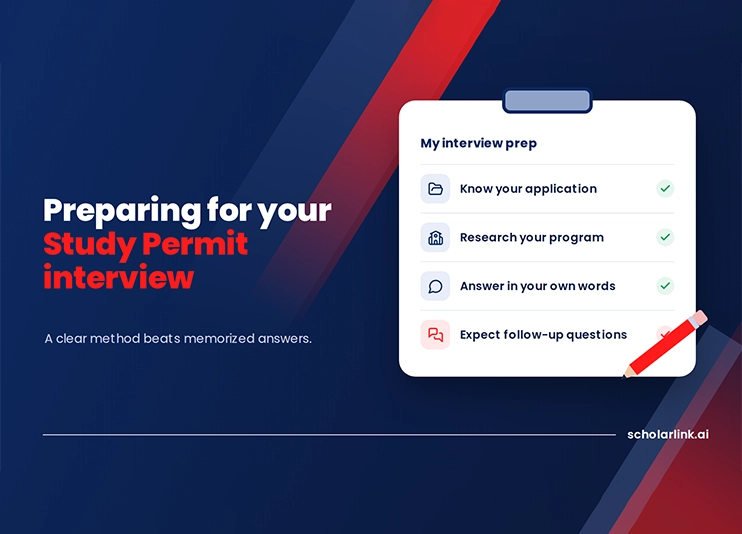
Thorough Canada student visa interview preparation requires a clear method rather than simple memorization. Since IRCC may ask applicants to attend an interview or provide additional information during the application review, you should be prepared to explain the information in your application clearly and accurately.
- Know Your Application Thoroughly: Review the forms, supporting documents, financial information, academic records, and other materials submitted with your application. Make sure you understand the information you provided and can explain it accurately if the officer asks for clarification. IRCC requires applicants to provide complete and accurate information.
- Research Your Program and Institution: Be familiar with important details about your program, including its curriculum, duration, tuition costs, institution, and location. You should also understand why the program and institution fit your academic or professional goals.
- Prepare Clear, Authentic Answers: Practice explaining your academic background, study plans, program choice, and financial situation in your own words. Avoid relying on generic or memorized answers. Your responses should reflect your actual circumstances and remain consistent with the information submitted in your application.
- Anticipate Follow-Up Questions: An officer may ask additional questions based on your answers or information in your application. Be prepared to explain areas such as gaps in education, changes in your field of study, previous work experience, your choice of program, or how your studies will be financed.
Tips for a Canadian Student Visa Interview
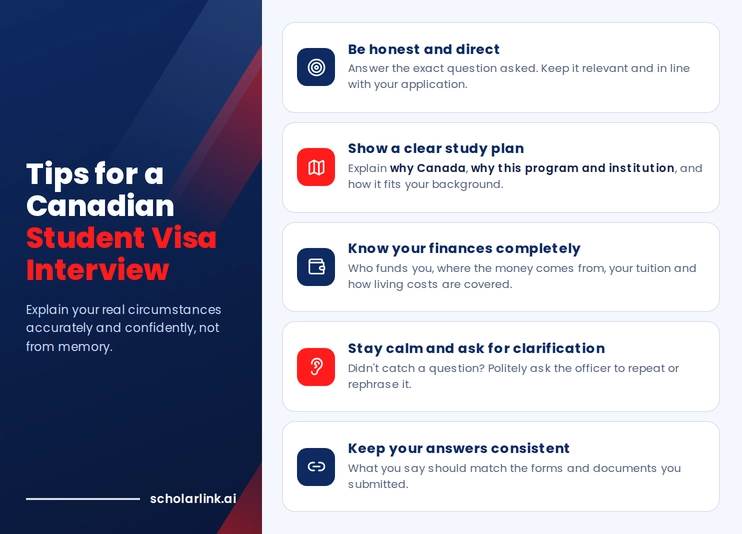
A successful Canada student visa interview requires clear communication, consistent information, and a well-prepared study plan. The goal is not to memorize specific answers, but to explain your circumstances accurately and confidently.
- Be Honest and Direct: Answer the specific question asked and keep your response clear and relevant. Avoid giving information that is inaccurate, inconsistent with your application, or unrelated to the question.
- Demonstrate a Clear Study Plan: Be prepared to explain why you chose Canada, your specific program and institution, and how the program fits your academic or professional background.
- Understand Your Finances Completely: Know who is funding your studies, the source of the funds, your tuition costs, and how your living expenses will be covered. IRCC assesses the amount and source of available funds when reviewing financial capacity.
- Stay Calm and Request Clarification: If you do not understand a question, politely ask the officer to repeat or rephrase it. Taking a moment to understand the question is better than giving an inaccurate answer.
- Keep Your Answers Consistent: Make sure your answers match the information and documents submitted with your Study Permit application. If an officer asks about your education, finances, program choice, or future plans, explain the circumstances reflected in your application.
Common Canadian Student Visa Interview Mistakes
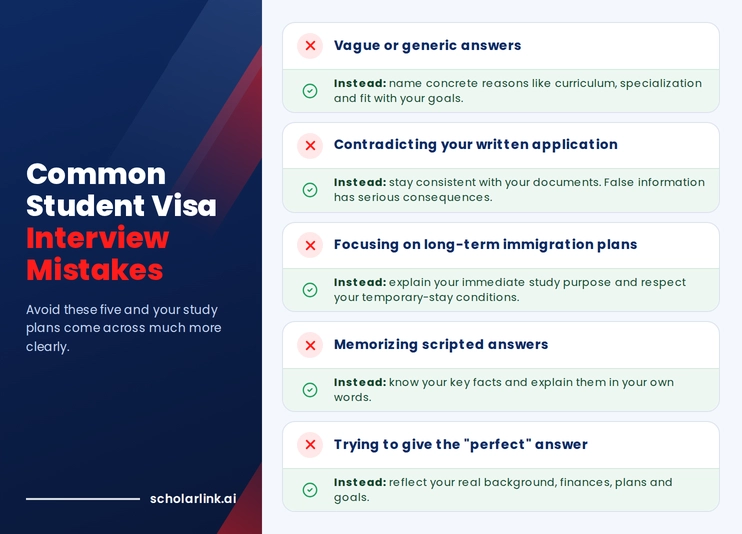
Avoiding common mistakes can help you communicate your study plans and personal circumstances more clearly during a Canada student visa interview.
- Giving Vague or Generic Answers: Saying that Canada is a “nice country” or that a university is “famous” does not explain why the specific program and institution are appropriate for you. Be prepared to discuss concrete factors such as the curriculum, specialization, academic resources, or connection to your background and goals.
- Contradicting Your Written Application: Your interview answers should be consistent with the information and documents submitted with your Study Permit application. Be especially careful when discussing your academic history, employment, finances, and study plans. Providing false or misleading information can have serious consequences for an immigration application.
- Focusing Too Heavily on Long-Term Immigration Plans: Your answers should clearly explain your immediate purpose for applying for a Study Permit and your plans for studying in Canada. If you have long-term plans that may involve staying in Canada, do not provide an answer that conflicts with your application or your obligation to comply with the conditions of your temporary stay. IRCC requires applicants to satisfy an officer that they will leave Canada when their study permit expires.
- Memorizing Scripted Answers: Preparing sample answers can be useful, but memorizing a fixed script can make it harder to respond to follow-up questions. Instead, understand the key facts in your application and practice explaining them in your own words.
- Trying to Give the “Perfect” Answer: Do not change your answer simply because you think a particular response will improve your chances. Your answers should reflect your actual academic background, financial circumstances, study plans, and future goals.
Sample Canadian Student Visa Interview Frameworks
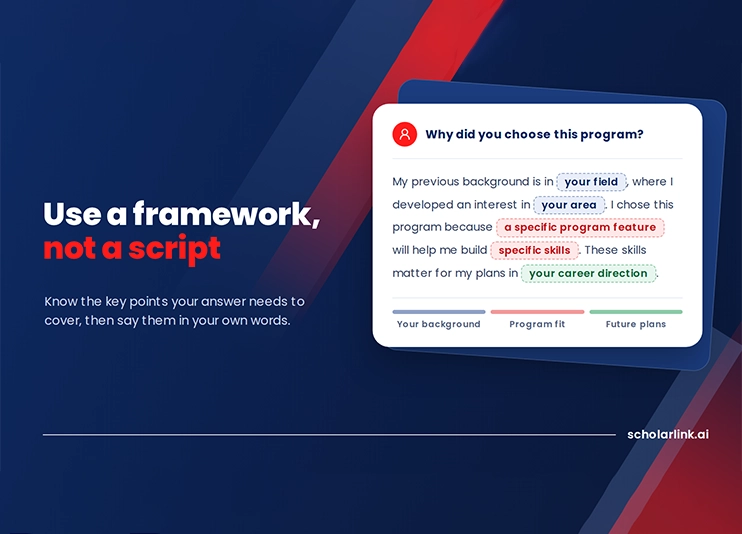
Instead of memorizing exact lines, use structured response frameworks to organize your thoughts and answer questions clearly. The goal is to understand the key points you need to explain rather than memorize a fixed script.
Question: Why did you choose this program?
Framework: Start with your academic or professional background, explain the skills or knowledge you want to develop, identify specific features of the Canadian program that address those needs, and connect the program to your future academic or career plans.
Example structure:
“My previous background is in [field], and through my studies/work, I developed an interest in [area]. I chose this program because [specific program feature] will help me develop [specific skills or knowledge]. These skills are relevant to my future plans in [career/academic direction].”
Question: Who is funding your studies and how?
Framework: Identify your financial sponsor or funding sources, explain their occupation or source of income, state the funds available for your studies, and explain how tuition and living expenses will be covered.
Example structure:
“My studies will be funded by [sponsor/self/scholarship]. The funds come from [income/savings/education loan/other source]. I have planned for approximately [amount] in tuition and living expenses, and the available funds are intended to cover these costs.”
Question: Why did you choose this institution?
Framework: Mention the specific features of the institution or program that influenced your decision, such as curriculum, specialization, research opportunities, facilities, location, or other factors relevant to your academic goals. Explain why these factors matter to you rather than relying on general statements about the institution’s reputation.
Example structure:
“I chose [institution] because its [specific feature] is particularly relevant to my interest in [field]. The program also offers [specific course/research opportunity/resource], which fits the skills and knowledge I want to develop.”
Question: What are your plans after graduation?
Framework: Explain your intended next step after completing the program and connect it to your previous background, the qualification you will gain, and your broader academic or career plans. Keep the answer consistent with the information provided in your application.
Example structure:
“After completing the program, I plan to [career/further-study plan]. The qualification will help me build on my previous experience in [field] and develop [specific skills]. My longer-term plans are focused on [career or academic direction].”
What to Bring to a Canadian Student Visa Interview
If IRCC asks you to attend a Canada student visa interview, carefully review the interview notice and any instructions provided by the responsible visa office. The documents you may need can vary depending on your application and circumstances. Prioritize documents specifically requested in your interview notice and keep relevant supporting documents organized and accessible.
- Identification & Application Documents: Bring your valid passport and a copy of the interview invitation or instructions. You should also have your Letter of Acceptance (LOA) from your Designated Learning Institution (DLI) and other key documents from your Study Permit application available for reference. If IRCC has specifically requested additional documents, bring them as instructed.
- Financial Evidence: Keep relevant proof of financial support available, such as recent bank statements, proof of paid tuition or housing fees, education loan documents, scholarship information, or documents showing financial support from a sponsor. The specific documents you need depend on how you are funding your studies and the evidence included in your application. IRCC assesses both the amount of available funds and their source.
- Academic & Personal Background: Have copies or records of relevant academic documents, such as degree certificates, transcripts, and language test results where applicable. You may also keep your CV or resume, employment letters, and Letter of Explanation or other supporting statements from your application available in case you need to clarify your academic or professional history.
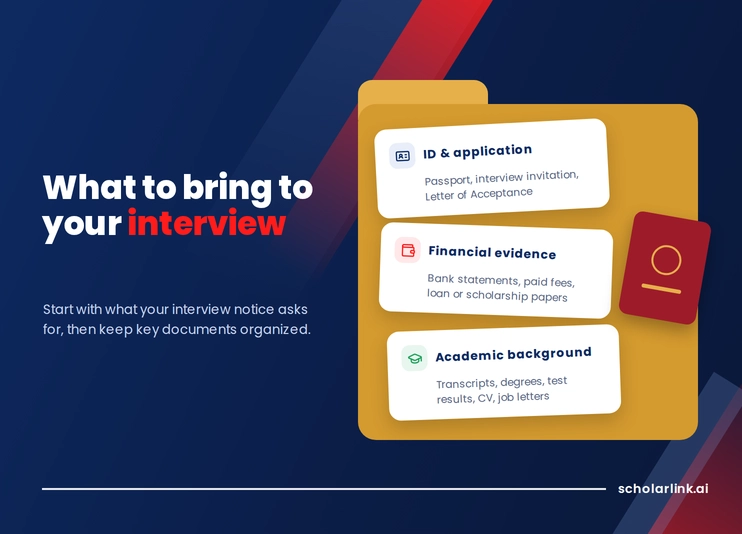
Before attending the interview, compare these documents with the information in your submitted application. The purpose is not to bring every document you have ever submitted, but to make sure you can accurately explain the key information in your application if the officer asks for clarification.
What Happens After the Interview?
After the interview, IRCC continues reviewing your Study Permit application using the information and documents provided in your application and during the interview. The interview is only one part of the overall application review, and the next steps can vary depending on your individual circumstances.
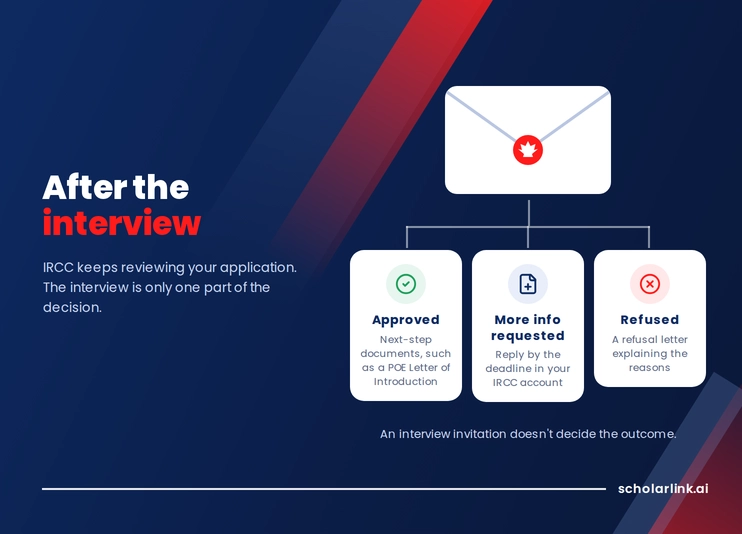
- Application Approved: If your application is approved and you applied from outside Canada, IRCC will provide the documents and instructions needed for the next steps. Depending on your circumstances, this may include a Port of Entry (POE) Letter of Introduction and the travel document required to enter Canada. The POE Letter of Introduction is not the Study Permit itself.
- Request for Additional Information or Documents: IRCC may ask you to provide additional information or supporting documents if further clarification is needed before a decision is made. Follow the instructions in your IRCC account or in the request you receive and provide the information within the specified timeframe.
- Application Refused: If your application is refused, IRCC will send a refusal letter explaining the reasons for the decision. Study Permit applications may be refused if the applicant does not meet requirements such as financial capacity or the requirement to satisfy an officer that they will leave Canada when their study permit expires.
Because an interview does not determine the application on its own, being invited to an interview does not automatically mean that your application will be approved or refused.
Canadian Student Visa Interview vs. Study Permit Application
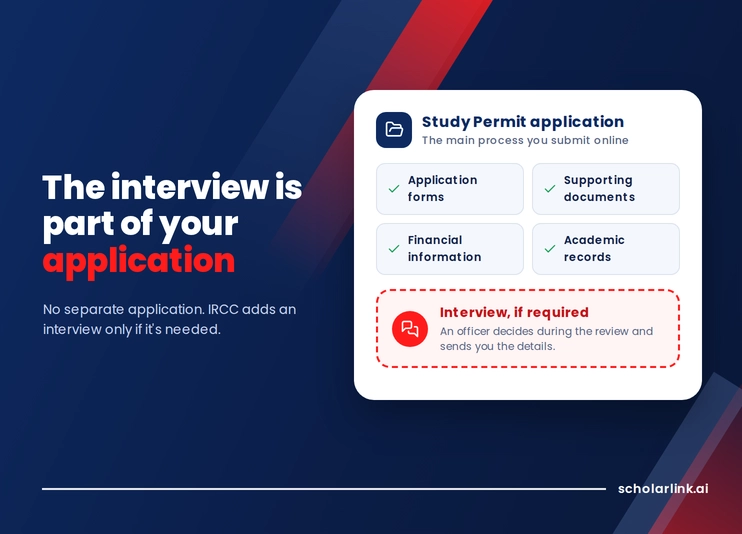
It is important to distinguish between the Study Permit application and a potential interview during the application review process. The interview is not a separate application or a replacement for the standard Study Permit process.
The Study Permit Application is the main application process through which you provide your application forms, supporting documents, financial information, academic records, and other required information to IRCC. Applicants generally apply online and must provide the documents required for their individual circumstances.
The Interview is an additional step that IRCC may require during the review of a Study Permit application. An officer reviews the application and determines whether an interview is necessary. IRCC may also ask the applicant to provide additional information or documents. If an interview is required, the applicant will receive instructions specifying the interview details.
In other words, you do not submit a separate application for a Canadian student visa interview. You first apply for the Study Permit, and if IRCC determines that an interview is necessary, the interview becomes part of the assessment of that application.
Frequently Asked Questions
Does Canada require a student visa interview for everyone?
No. Interviews are not mandatory for all applicants. IRCC may ask an applicant to attend an interview when an officer determines that one is necessary during the application review.
What should I wear to a Canadian student visa interview?
Clean, business-casual attire is generally appropriate. The focus should be on presenting yourself professionally and being prepared to answer questions clearly.
How long does a Canadian student visa interview take?
The length of an interview can vary depending on the application and the questions the officer needs to address. There is no fixed interview duration that applies to every applicant.
Can a student visa interview lead to a refusal?
Yes. An interview is part of the overall Study Permit assessment. If the applicant does not satisfy the requirements for a Study Permit, the application may be refused.
What happens if I do not understand an officer’s question?
Politely ask the officer to repeat or rephrase the question. Clarifying the question is better than providing an inaccurate or irrelevant answer.

ScholarLink AI
Your Ultimate Admission Co-Pilot
- 🎓 Professors Database: World’s largest supervisor directory
- 📡 Live Positions: Real-time faculty openings & vacancies
- 👥 Students Database: Connect with successful applicants
- 🎯 Smart Matching: AI-driven professor recommendation
- 💰 Funding Analysis: Real-time lab & research funding data
- 📝 Apply Management: Track applications & cold emails