
Many applicants confuse a Statement of Purpose (SOP) with a resume or a cover letter. This is a critical mistake. A resume lists what you’ve done. An SOP explains why you did it, what you learned, and why it matters for your future. It’s your chance to give a voice and personality to the bullet points on your CV.
Think of it this way: your application has a technical half (transcripts, test scores, resume) and a human half (SOP, letters of recommendation). The SOP is your primary tool for shaping the human narrative.
Here’s a clear breakdown:
| Feature | Statement of Purpose (SOP) | Resume / CV |
|---|---|---|
| Primary Goal | To tell a persuasive story about your academic and career journey. | To provide a quick, scannable summary of your qualifications. |
| Focus | The “Why” and “How” (Your motivations, learnings, and future goals). | The “What” and “When” (Your roles, skills, and accomplishments). |
| Tone | Narrative, reflective, and forward-looking. | Factual, concise, and professional. |
| Format | Prose paragraphs, essay format. | Bullet points, structured sections. |
| Key Question It Answers | “Why are you a perfect fit for our specific program?” | “What are your skills and experiences?” |
The Storytelling Framework: A 5-Stage Structure for a Winning SOP
Instead of just listing tips, let’s use a proven storytelling framework. This structure turns your collection of facts into a memorable narrative.
Stage 1: The Hook – An Unforgettable Opening
Your first paragraph is the most important. It must grab the reader. Don’t start with “I am writing to apply for the MS in Data Science program…” Start with a specific, personal anecdote or a powerful insight that led you to data science.
Stage 2: The Spark – Why Data Science?
After your hook, broaden the lens. Explain what about data science fascinates you. Is it the power to predict outcomes, uncover hidden patterns, or drive business decisions? Connect your personal story from the hook to a genuine intellectual curiosity in the field.
Stage 3: The Proof – The Story of Your Skills and Projects
This is the body of your SOP. Here, you provide evidence for your claims. Don’t just list your projects. For 2-3 of your most significant projects (academic, professional, or personal), tell a mini-story using the STAR method:
- Situation: What was the context or problem?
- Task: What was your specific goal or responsibility?
- Action: What did you do? (Mention specific techniques, tools like Python, R, SQL, TensorFlow, etc.)
- Result: What was the outcome or impact? What did you learn?
Stage 4: The Bridge – Why This University and This Program?
This is the most critical part for customization. You must prove you’ve done your homework. Connect your background and goals directly to what this specific program offers. Mention:
- 2-3 Professors whose research aligns with your interests.
- Specific labs, research centers, or consortiums you want to join.
- Unique courses or curriculum tracks that excite you.
Stage 5: The Future – Your Post-Graduation Goals
Conclude by looking forward. What are your short-term and long-term career goals? Be specific. Instead of “I want to be a data scientist,” say “I aim to work as a machine learning engineer in the healthcare tech sector, developing predictive models for early disease detection.” Then, explain how this Master’s degree is the essential next step to get you there.
Paragraph-by-Paragraph Breakdown with (Before & After) Examples
Let’s see this framework in action. Here’s how to transform generic, weak paragraphs into powerful, specific statements.
Paragraphs 1-2: The Hook and The Spark
| Before (Weak) | After (Strong & Specific) |
|---|---|
| “I am passionate about data science because it is the future. Ever since I was young, I have been good with numbers and computers. I believe the MS in Data Science program at your university will help me achieve my dreams.” | “My fascination with data began not in a classroom, but while sifting through terabytes of genomic data for my undergraduate thesis. I was searching for a single nucleotide polymorphism (SNP) linked to a rare genetic disorder. The moment I wrote a Python script that visualized the correlation and isolated the target marker, I understood the profound power of data: it could turn a sea of noise into a beacon of hope. This experience ignited my desire to move beyond theoretical biology and master the tools to extract meaning from complex datasets.” |
Paragraphs 3-4: The Proof (Using the STAR Method)
| Before (Weak – A list) | After (Strong – A story) |
|---|---|
| “For my capstone project, I worked on a sentiment analysis model. I used Python, NLTK, and Scikit-learn. I preprocessed the data, trained a logistic regression model, and achieved 85% accuracy. This project improved my machine learning skills.” | “To address declining user engagement at a student-run e-commerce site, my team was tasked with understanding customer feedback. (Situation) My goal was to build a sentiment analysis pipeline to categorize thousands of user reviews. (Task) I took the lead on data preprocessing, using Python’s NLTK library to tokenize, lemmatize, and remove stop-words from the raw text. I then engineered TF-IDF features and trained several models, finding that a Logistic Regression classifier offered the best balance of speed and accuracy. (Action) The resulting model, which achieved 85% accuracy, was deployed as a dashboard that gave the marketing team real-time insights. We discovered that ‘slow shipping’ was the primary driver of negative sentiment, allowing the operations team to address the bottleneck and improve satisfaction scores by 15% in the following quarter. (Result) This project taught me that the true value of a model isn’t its accuracy score, but its ability to drive actionable business decisions.” |
Full Annotated Sample SOP for an MS in Data Science
Here is a complete sample SOP written for a fictional applicant applying to a top-tier Data Science program. Pay attention to the annotations, which explain the strategy behind each paragraph.
(Start of Sample SOP)
My journey to data science began with a single cell. As an undergraduate biology researcher studying cellular senescence, I spent months manually identifying and counting fluorescently-tagged cells under a microscope—a tedious, error-prone process. Frustrated by the inefficiency, I taught myself Python and developed a basic computer vision script using OpenCV to automate the task. The first time the script correctly identified and counted thousands of cells in seconds, I felt a spark. It wasn’t just about saving time; it was about using computation to unlock a scale of analysis that was previously unimaginable. I realized then that the biggest discoveries in modern biology would be made not just through a microscope, but through the intelligent analysis of the massive datasets it produces.
Annotation: A perfect “Hook.” It starts with a specific, personal story. It immediately establishes the applicant’s field (biology), a problem, and a moment of discovery. It avoids clichés and shows initiative (“I taught myself Python”).
This initial spark grew into a full-fledged passion for harnessing data. My undergraduate curriculum in molecular biology provided me with a strong analytical foundation, but I actively sought out opportunities to build my computational skill set. I supplemented my coursework with online certifications in machine learning and data structures, and I applied these skills to my capstone project, where I analyzed RNA-sequencing data to identify differential gene expression in cancer cells. Using the DESeq2 package in R, I was able to pinpoint three novel genes that were significantly upregulated, a finding that my supervising professor encouraged me to present at the University’s annual research symposium. This project confirmed my desire to pivot from a purely wet-lab role to a computational one, where I could work with data at a systemic level.
Annotation: This is “The Spark” and early “Proof.” It connects the hook to a broader intellectual curiosity. It demonstrates proactiveness (online courses) and applies the skills to a significant academic project, even mentioning a specific tool (DESeq2) and a positive outcome (presenting at a symposium).
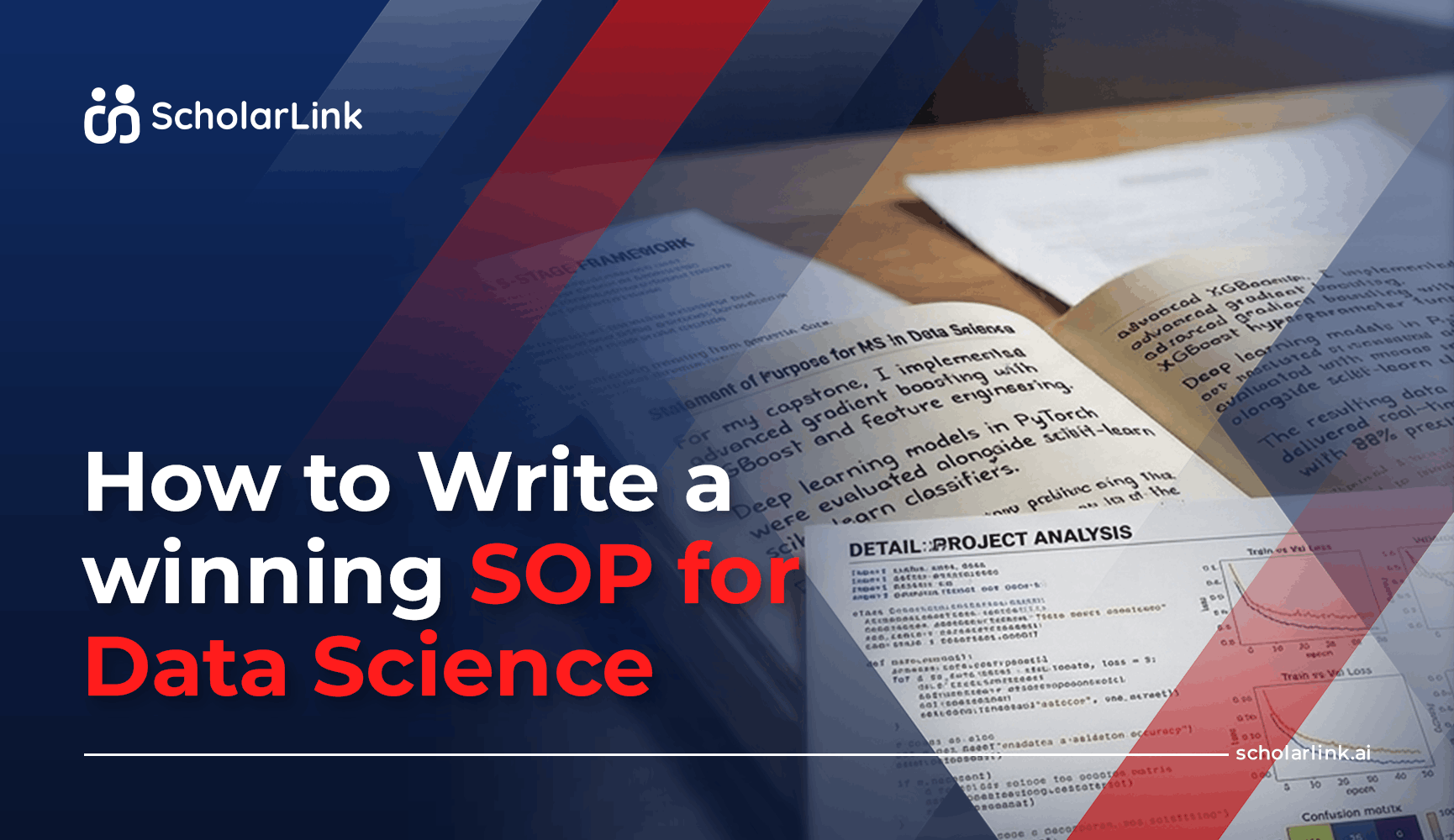
To test my skills in a non-biological context, I dedicated a semester to a personal project analyzing public transit data from the City of Boston. My goal was to build a model that could predict bus delays based on time of day, weather, and traffic patterns. I collected and cleaned data from multiple APIs, performed extensive exploratory data analysis in Pandas and Seaborn, and engineered features to capture temporal dependencies. After experimenting with several models, my XGBoost classifier was able to predict delays of over 10 minutes with 88% precision. This project was a crucial learning experience, teaching me the entire data science lifecycle, from messy data acquisition and feature engineering to model deployment and interpretation. More importantly, it showed me that my skills were transferable and that I was excited by the challenge of finding signals in any domain.
Annotation: Excellent “Proof” paragraph. It uses the STAR method implicitly. It showcases a diverse skill set (APIs, Pandas, Seaborn, XGBoost) and demonstrates a passion for data science that extends beyond their primary field. This addresses a potential concern that the applicant is “only” interested in bioinformatics.
My goal is to become a data scientist in the healthcare technology industry, specifically focusing on building diagnostic tools from clinical and imaging data. This is why the Master of Science in Data Science program at Carnegie Mellon University is my first and only choice. The program’s interdisciplinary approach and strong ties to the medical center are unparalleled. I am particularly drawn to the work of Professor Jane Doe on interpretable deep learning for medical imaging. Her research on using SHAP values to explain CNN predictions in mammography aligns perfectly with my goal of creating models that are not only accurate but also trusted by clinicians. I am also excited by the prospect of taking courses like ’10-605 Machine Learning with Large Datasets’ and the opportunity to participate in the Healthcare Analytics Lab, which would provide hands-on experience with the exact kind of challenges I want to solve in my career.
Annotation: A masterful “Bridge” paragraph. It’s highly specific. It mentions a clear career goal, names a specific professor and her research, explains why that research is interesting, lists a specific course, and names a specific lab. This proves genuine interest and a perfect fit.
Upon completing the MS in Data Science program at CMU, I plan to join a leading health-tech company like Tempus or Flatiron Health as a machine learning scientist. My long-term ambition is to lead a research team dedicated to developing AI-powered early-warning systems for oncology, translating complex patient data into life-saving clinical insights. Your program, with its rigorous technical training, focus on real-world applications, and direct access to leaders in the healthcare analytics space, is the single most important step in turning my ambition into reality. I am confident that my unique background in biology, combined with the computational skills I have cultivated, will allow me to contribute a diverse perspective to your incoming class.
Annotation: A strong “Future” conclusion. It states specific short-term (company names) and long-term goals. It ties everything back to the university, reiterating why the program is the essential catalyst for their career. It ends on a confident and forward-looking note.
(End of Sample SOP)
How to Customize Your SOP for Different Universities
You cannot send the same SOP to every university. Admissions committees can spot a generic, copy-pasted letter from a mile away. Follow the 80/20 rule:
- 80% of your SOP can remain the same: Your personal story, your background, your projects, and your overall career goals (The Hook, Spark, Proof, and Future).
- 20% MUST be customized: The “Bridge” paragraph that connects you to the specific university.
Here is your checklist for customizing that crucial 20%:
- Research the Faculty: Go to the program’s faculty page. Find 2-3 professors whose research genuinely excites you. Read the abstracts of their recent papers. In your SOP, name them and explain why their work interests you.
- Scour the Curriculum: Look at the course catalog. Are there unique electives, concentrations, or tracks that align with your goals? Mention them by name (e.g., “the Natural Language Processing track,” or “the course on Reinforcement Learning”).
- Find the Labs and Centers: Does the university have a special research lab, institute, or center? (e.g., a “Data for Social Good” center or an “AI in Medicine” lab). Mentioning your desire to contribute to one shows deep interest.
- Look for Industry Connections: Does the program boast about its capstone projects with industry partners or its strong alumni network in a specific sector you’re targeting? This can be another point of connection.
Frequently Asked Questions (FAQ) about Data Science SOPs
1. How do you start an SOP for data science?
Start with a compelling personal story or a specific moment that sparked your interest in data science. Avoid generic openings like “I am applying for…” Your first paragraph should be a “hook” that makes the reader want to learn more about you.
2. What skills should I mention in my data science SOP?
Mention both technical and soft skills. For technical skills, don’t just list them. Weave them into the stories of your projects (e.g., “I used Python’s Scikit-learn library to build a logistic regression model…”). Mention programming languages (Python, R), databases (SQL), core libraries (Pandas, NumPy, TensorFlow, PyTorch), and concepts (statistics, probability, machine learning algorithms). Also, showcase soft skills like problem-solving, communication, and teamwork through your project descriptions.
3. How do I write an SOP for a Master’s in Data Science with no work experience?
Focus heavily on your academic and personal projects. Your capstone project, thesis, or even complex homework assignments can serve as excellent “Proof.” Highlight relevant coursework, online courses (Coursera, edX), and participation in platforms like Kaggle. Frame your lack of experience as a strength: you are a blank slate ready to be molded by their specific program, bringing fresh academic knowledge and immense enthusiasm.
4. Can I use the same SOP for different universities?
No. You must customize at least one or two paragraphs for each university. This section (The Bridge) should detail why you are a perfect fit for their specific program, mentioning their faculty, labs, and courses. A generic SOP signals a lack of serious interest.

ScholarLink AI
Your Ultimate Admission Co-Pilot
- 🎓 Professors Database: World’s largest supervisor directory
- 📡 Live Positions: Real-time faculty openings & vacancies
- 👥 Students Database: Connect with successful applicants
- 🎯 Smart Matching: AI-driven professor recommendation
- 💰 Funding Analysis: Real-time lab & research funding data
- 📝 Apply Management: Track applications & cold emails